Saturday, July 27, 2019

Swing - and happy feet - are paramount at Roy Gerson’s new gig...


Pianist Roy Gerson, who moved from his native New York a couple of years ago, has brought a refreshing 1940s bite of the Big Apple to Southwest Florida.

Roy Gerson
His new eight-member Swingtet is one month into its Friday night residency at Society Restaurant & Lounge in Fort Myers’ bustling Bell Tower Shops plaza. His concept for this band’s fun evenings is re-creating the Manhattan supper club atmosphere back in the day – where you could hear top jazz musicians playing a wide variety of swing, Latin and even pop music for dining, listening and dancing. Yes, at Roy’s Swingtet gigs, dancing is not only permitted, it is encouraged – either next to your table or right in front of the band.

On Friday, July 26, Gerson’s fine band included his wife, Corrine Manning, on vocals, Don Mopsick on bass, Tony Vigilante on drums, Frank Portolese on guitar, Dan Miller and Randy Sandke on trumpet, and Herb Bruce on trombone. The horn line shifts a bit from week to week, depending on which musicians are available.
Miller, Gerson, Mopsick

The evening’s repertoire was all over the musical map, but oh did it swing.

There were some Swing-era staples: (“Lady Be Good,” “Caravan,” “Perdido,” “Sweet Georgia Brown” and the classic Louis Jordan hit “Is You Is Or Is You Ain’t My Baby.” There were several varied New Orleans-based tunes: “Bourbon Street,” “Do You Know What It Means to Miss New Orleans” and “Iko Iko.” The Latin fare ranged from cha cha to the Mexicana-flavored rock hit “Tequila” and “Quando, Quando, Quando,” which originated as a bossa nova-styled Italian pop song. The evening also featured the bossa classic “Girl from Ipanema.”
Sandke, Portolese, Miller

There were beautiful musical moments. Sandke, another recent transplant from New York, was featured on “Stardust.” Miller turned great solos on “Basin Street Blues” and “Do You Know What It Means to Miss New Orleans,” with Bruce doing the same on “Stars Fell on Alabama.” Vigilante rose to the Gene Krupa challenge on “Sing, Sing, Sing,” the Benny Goodman Orchestra classic written by Louis Prima. Portolese, a Chicago jazz fixture for 30 years, shifted with ease between rhythm guitar and masterful solos throughout the night.

The dancers got into the mix on the band’s spirited version of “Jump, Jive an’ Wail,” the 1956 Prima hit that Brian Setzer brought to fresh ears four decades later. Manning’s solid vocals were especially effective on that one, as well as “What a Difference a Day Made,” “I Can’t Live Without You” and the Al Green hit “Let’s Stay Together.”

Suffice it to say that you won’t find a jazz atmosphere like this anywhere else in the region. It was enhanced by a visual mood-setter: three walls of shifting classic black-and-white images of varied jazz greats from across the decades. 
The Roy Gerson Swingtet

Dancing is encouraged
 

Wednesday, June 19, 2019

A swinging intersect of science and jazz


Scientific research and anecdotal evidence have made it clear that music can be a healing force. That intersection music and science is a two-way street. Look no further than Tampa-based jazz pianist John C. O’Leary III, who has composed music that is inspired by science. In this case, it reflects aspects of his research as a neuroscientist.

This Mexican-born performer has had a hybrid educational life. He attended the University of South Florida where he studied tuba, jazz piano and biochemistry. He graduated with a B.A. in jazz piano performance, a minor in tuba performance, and an honors thesis in biochemistry. He then earned a Ph.D. in neuroscience. For his doctoral dissertation, he researched a group of proteins termed “chaperones” and their effects on the development of neurological diseases, including Alzheimer’s, and stress-related psychiatric diseases. 

John O'Leary
Ultimately, his love of jazz piano shifted his career track. He’s the pianist in the fine Tampa Bay Area-based trio La Lucha, which also includes bassist Alejandro Arenas and drummer Mark Feinman. But O’Leary’s interest in neuroscience inspired his 2018 solo recording project, CRISPR (Gamma Rhythm Music), which bridges his twin interests.

The repeating melody that runs through the title track, with slight variations, acknowledges the impact of CRISPR, an acronym for “clustered regularly interspaced short palindromic repeats.”  These DNA base pairs are found many forms of bacteria. CRISPR technology is used to destroy viruses and otherwise improve health through gene editing. O’Leary said he considers it the most significant scientific development in this new century.

Another composition, “Polymorphism,” is built around the idea that a shift of just one note can make a dramatic change the feeling of a piece of music, just as a change in one protein in the body can have major consequences on one’s health. His blues, “Gamma Frequency,” reflects the research that exposure to gamma rays can impact goal-oriented behavior.

The afternoon’s tour-de-force was his composition “Edna Welsch.” The instrumental was commissioned by a grandchild to remember and capture the inner beauty of a woman who died from Alzheimer’s  It began as light and upbeat, then grew progressively darker and brooding, before resolving with an ending segment that, while a bit different from the opening, had a sense of peace and beauty.

“The opening melody expresses her young, vibrant life,” O’Leary said, “then it becomes more angular and depressing, and in its final stage, she has moved on to the next life.” A listener could also interpret the ending as resolving with the memories that friends and relatives retain of her vibrant years.

O’Leary shared his science-and-music perspective on June 15, at the Charlotte Symphony Orchestra’s Medical Grand Rounds lecture series. Several times a year, the medical forum focuses on different aspects of the links between music and medicine.

The prior evening, La Lucha performed at JD’s Bistro in Port Charlotte, performing originals and jazz standards flavored with the band’s adventurous touches. One gem, “Cheek to Cheek,” opened with the standard melody before O’Leary inserted Latin clave and blues interludes.

Wednesday, June 5, 2019

CDs of Note - Short Takes


This singers unlimited edition takes a look at new CDs by Tony Adamo, Laurie Antonioli, Nancy Kelly, the Tierney Sutton Band and Judy Wexler .…

Tony Adamo, Was Out Jazz Zone Mad (Ropeadope)

No single adjective quite sums up the essence of Tony Adamo, though he tries with his own “hipspokenword” descriptive. He’s a beat poet. hipster and a bit of a musicologist rolled into one. He sounds like he was born a few decades too late to savor the vintage bopping atmosphere he sings and talks about with authority in much of his material. Adamo digs the 1950s and ‘60s – capturing the mood of the times, and other things, on his latest recording, Was Out Jazz Zone Mad. Along the way, he improvises about the likes of saxophonist Joe Henderson, bluesman B.B. King, trumpeter Eddie Gale and singer Leon Thomas, as well of the times that resulted in the “Birth of the Cool.” On “Too Funky to Flush,” he also revels in the atmosphere – and food – of New Orleans. This jazz and funk odyssey finds him in fine musical company, including drummers Mike Clark and Lenny White, B-3 player Mike LeDonne, Tower of Power keyboard player Roger Smith, percussionist Bill Summers, pianist Michael Wolff, guitarist Jack Wilkins, saxophonist Donald Harrison and trumpeter Tim Ouimette, among others, on various tracks. Ya dig?

Laurie Antonioli, The Constant Passage of Time (Origin)

Singer Laurie Antonioli has a gem here, one that reveals the many facets of her musical talent. She’s got perfect pitch, the ability to immerse herself into the band she works with (a musician whose instrument is her voice), and she’s a superb lyricist. This long-time educator chairs the vocal program at the California Jazz Conservatory in Berkeley. Antonioli and her band-mates put fresh spins on a wide variety of source material including Sheryl Crow’s “Riverwide,” Neil Young’s more intense “”Don’t Let it Bring You Down,” and several Joni Mitchell pieces: “Love” and a medley of two other Mitchell tunes, “Harry’s House” and “The Arrangement.”
Favorite tracks: the Crow and Young tunes, and several collaborations for which Antonioli wrote beautiful lyrics. They include “Layla” (a piece by guitarist Nguyen Le originally titled “Bee”), “Highway” and “Moonbirds,” both of which she co-wrote with German saxophonist Johannes Enders, and Paul Nagle’s “And So It Is” (originally titled ”As Is”). Antonioni’s band includes reed player Sheldon Brown, guitarist Dave MacNab, pianist Matt Clark, bassist Dan Feiszli and drummer Jason Lewis. All contribute much to the project, with MacNab soaring on his axe.

Nancy Kelly, Remembering Mark Murphy (SubCat)

The late Mark Murphy was a jazz singer like no other – his delivery digging deep, soaring and swooping as he found his own rhythmic and melodic essences in a song. He also was a fine lyricist when so inspired. Nancy Kelly selected 10 tracks from Murphy’s extensive repertoire to celebrate his legacy. She puts her own breezy stamp on that material with a talented band that included pianist and producer John DiMartino, alto saxophonist Bobby Militello, guitarists Paul Bollenback, Steve Brown and Paul Meyers, bassists Ed Howard and Peter Mack, and drummer Carmen Intorre Jr. Randy Brecker joined the band for three tracks on which he also played trumpet on Murphy’s recordings: Freddie Hubbard’s “Red Clay” (with lyrics by Murphy), “Vera Cruz” and “Body and Soul.” Favorite gems include two tracks for which Murphy penned lyrics: “”Song for the Geese” and Oliver Nelson’s “Stolen Moments. This beauty stands out for its homage to Murphy, and for Kelly’s beautiful updates with her talented band.

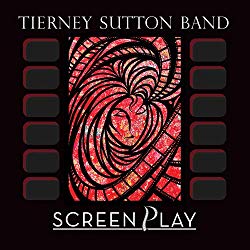
Tierney Sutton Band, ScreenPlay (BFM Jazz)

Singer Tierney Sutton is no stranger to the intersection of music and film. She recorded one song on the soundtrack for 2003’s The Cooler, and she and her excellent band wrote and recorded the soundtrack for 2016’s Clint Eastwood-directed film Sully. That movies-and-music affinity has come to full blossom on the Tierney Sutton Band’s latest recording, ScreenPlay. Digging through 80 years of American cinema, Sutton & Co. put their own artful stamp on 15 movie songs. All five members of the band – Sutton, pianist Christian Jacob, bassists Kevin Axt and Trey Henry, and drummer Ray Brinker – contributed carefully crafted arrangements that revealed new and interesting facets in this material.

Five tunes, including the opener, Michel Legrand’s “The Windmills of Your Mind,” feature lyrics by Alan and Marilyn Bergman. Alan Bergman joined Sutton for a vocal duet on his classic “How Do You Keep the Music Playing?” Guitarist Serge Merlaud also joined on that one, as well as “I’ve Got No Strings” from Pinocchio and “It Might Be You” from Tootsie. “Windmills” is propelled by Brinker’s exotic, windmill-like brush pattern. Other favorite tracks include their update to Paul Simon’s “The Sounds of Silence” from The Graduate and a clever Latin 5/4 burner on “You’re the One That I Want,” one of two featured tracks from Grease. The most innovative are the band’s beautiful mash-up of “Moon River” from Breakfast at Tiffany’s and “Calling You” from Baghdad Café, and Axt and Henry’s two-bass romp through “If I Only Had a Brain” from The Wizard of Oz. Sutton is an exquisite top-tier vocalist who immerses herself in the band atmosphere. Because of it, there’s so much to like here.

Judy Wexler, Crowded Heart (Jewel City Jazz)

The finest songs in the Great American Songbook and vintage jazz canon contain carefully crafted lyrics speaking to the human experience with wit and/or wisdom. Singer Judy Wexler used her latest project, Crowded Heart, to share newer material of that same high standard. Its 10 songs were developed by modern-day jazz singers and instrumentalists. There’s quite a stylistic range here, blended into a cohesive song palette by Wexler, pianist and co-producer Alan Pasqua, and their fine Southern California  band. It includes reed players Josh Johnson and Bob Sheppard, guitarist Larry Koonse, bassist Darek Oles, drummer Steve Hass, percussionist Aaron Serafty and cellist Stefanie Fife.

Danish singer Sinne Eeg wrote the title track with lyrics by Mads Mathias. Those bittersweet lyrics refer to the end of an affair with a married man. Other standout tracks: Luciana Souza’s stunning samba “Circus Life” about life in today’s fast lane; Gregory Porter’s “Painted on Canvas"; Richard Galliano and Kurt Elling’s “Parisian Heartbreak” featuring Pasqua on melodica; Rene Marie’s sultry “Take My Breath Away”; the Fred Hersch-Norma Winstone collaboration “Stars”; and Pasqua’s “And We Will Fly,” with lyrics by Elling and Phillip Gladston. The latter is a beautiful showcase for Koonse’s guitar artistry. Wexler and Pasqua have done today’s jazz listeners a great service by artfully opening doors to material with which you may not have been familiar – or haven’t spent enough time savoring.

Wednesday, May 29, 2019

Newport is beckoning again....

While it is eight weeks away, the 2019 edition of the Newport Jazz Festival feels like it is right around the corner. Time flies, no matter which time signature you're using.

This August will bring my 39th annual trip to Newport, attending all but one of the Jazz Festivals since George Wein brought the storied event back to Newport in 1981, as well as many of its companion Newport Folk Festivals.

Three afternoons and one evening of music by more than 50 bands from August 2-4, cover mainstream, Latin, modern jazz and the avant garde. Only fans of Dixieland and other early jazz styles have nothing to sate their classic jazz appetites on this year's announced program. How times have changed since the very first Newport Jazz Festival in 1954 when Eddie Condon's Dixieland band kicked off the event with "Muskrat Ramble."
Herbie Hancock

This year's headliners include Herbie Hancock, Kamasi Washington, Thundercat, the Bad Plus, Common, and singers Dianne Reeves and Cecile McLorin Salvant.

With so much to choose from on four stages, here's what I most look forward to hearing:
  • Hancock, who as Artist-in-Residence will be featured in different contexts throughout the weekend. On Saturday, for example, he performs in a trio with bassist/festival artistic director Christian McBride and drummer Vinnie Colaiuta.
Friday
  • British singer Corinne Bailey Rae, who will perform Friday afternoon at Fort Adams State Park and also be part of Jon Batiste's Friday night concert at historic Newport Casino, the original Newport Jazz Festival setting and longtime home of the International Tennis Hall of Fame.
    Ravi Coltrane
  • Alto saxophonist Gary Bartz's band with tenor saxophonist Ravi Coltrane and trumpeter Charles Tolliver.
  • Singer-pianist Kandace Springs
  • The afternoon will also feature a wide range of big bands: The Sun Ra Arkestra, the Spanish Harlem Orchestra and Darcy James Argue's Secret Society

Saturday 
  • Bassist Ron Carter's trio with guitarist Russell Malone and pianist Donald Vega.
    Dee Dee Bridgewater
  • Singer Dee Dee Bridgewater and the Memphis Soulphony.
  • New York's Royal Bopsters vocal group featuring special guest Sheila Jordan.
  • Saxophonist Ravi Coltrane and pianist David Virelles.
  • Drummer Ralph Peterson's Messenger Legacy band, carrying on the great sound of Art Blakey's Jazz Messengers.
  • Pianist Brandon Goldberg's trio.
Helen Sung
Sunday
  • Christian Sands' three-piano tribute to Erroll Garner featuring fellow pianists Helen Sung and Tarataka Unno.
  • Cuban drummer Dafnis Prieto's Big Band.
  • Pianists Aaron Diehl, Eric Lewis (ELEW) and PJ Morton.
  • A duo performance by pianist Helen Sung and baritone saxophonist Lauren Sevian. 
Jon Batiste
Ron Carter
There always will be pleasant surprises: great talents, emerging or otherwise, with whom I haven't crossed paths before. 

That's one of the joys of Newport. The other joy: there is always something for everyone, whether you sample tidbits at each stage - or camp in one spot for an artist you dig a lot.

Sunday, May 19, 2019

Jumping aboard the hard-bop express

Drummer Paul Gavin digs hard bop, a hard-driving jazz subgenre that embraced strong elements of funk, soul and the blues when it emerged in the 1950s. And he plays it with great joy and enthusiasm.
Paul Gavin

Art Blakey's Jazz Messengers band was one of hard bop's primary incubators. His unit also played a peerless role in developing scores and scores of fine bandleaders over the years. (You can find more detail on that legacy in this earlier posting.)

Gavin's newest band project, Mosaic, made its debut performance on Saturday, May 18, at the Firehouse Cultural Center in Ruskin. The band is named after one of Blakey's finest albums, a 1961 Blue Note project for which pianist Cedar Walton composed the title track.

This night's music was drawn entirely from the Jazz Messengers repertoire, which made sense for two reasons - Blakey's influence on jazz, and the fact that this is the centennial of his birth year. The Pittsburgh native was born on October 11, 1919. He died in 1990.
Bruce, Suggs, Gillespie

Tampa-based Gavin's sextet included pianist John O'Leary III, bassist Michael Ross, trumpeter James Suggs, tenor saxophonist Valerie Gillespie and trombonist Herb Bruce. They locked into the hard-bop groove and celebrated its vibrant legacy all night long in both ensemble sections and soloing.
Gavin, O'Leary

The repertoire was varied, drawing mostly from Jazz Messenger members Freddie Hubbard, Lee Morgan and Benny Golson, as well as Curtis Fuller, Bobby Timmons and Blakey himself.

Mosaic performed Morgan's "Calling Miss Khadija" and "Kozo's Waltz," Hubbard's "Crisis" and "Down Under," Golson's "Along Came Betty," Fuller's exotic-tinged "Arabia," and Walton's "Mosaic" and "Ugetsu."

There were two other fine spotlight moments:
Gavin, Ross
  • Mosaic's opening set concluded with Gavin's arrangement of Timmons' composition "Moanin'," which became the Jazz Messengers signature tune. After a horn-section intro, it became a very fine showcase for Ross. To Gavin's mind: "the Jazz Messengers never featured the bass player enough."
  • Gavin
  • The leader opened the second set with a stunning solo drum composition, reprising "The Freedom Rider," which Blakey wrote in tribute to the riders who helped end segregation on public buses - and ultimately, all forms of transportation.
The power and majesty of the trumpet was always a key element in the Jazz Messengers (whose horn-playing alumni included Hubbard, Morgan, Donald Byrd, Chuck Mangione, Terence Blanchard and Wynton Marsalis, among others). On this night, Suggs wore the mantle to great effect. His solos were on fire all night long. Gillespie and Bruce also had fine moments. Bruce, who works mostly in the classic jazz, Dixieland and swing genres, took on the hard-bop challenge and stretched his wings. He was showcased on "Along Came Betty."

Gavin, 27, is a 2015 graduate of the University of South Florida's jazz program. He works full-time as a performer and music educator.

Blakey's legacy was the inspiration for this band, but Gavin said he also plans to dig into other aspects of the hard-bop legacy as Mosaic develops. His said its next focus will be on the soulful sound of two Tampa natives who made a huge mark in jazz, brothers Cannonball and Nat Adderley.
Bruce, Suggs, Gillespie, Gavin, Ross, O'Leary